

Visiting the Bovet Headquarters in Château de Môtiers
A visit to Bovet’s headquarters at the historic Château de Môtiers offers a rare glimpse into the brand’s world of heritage and uncompromising watchmaking excellence.
In stories about watchmaking, which celebrates past, present and future, one might wonder what significance to attach to a name. I am wondering the same as I wander the area outside the Bovet manufacture, taking in as much of the atmosphere as possible. Unusually for a story in a section about manufactures and watchmaking regions, this story is neither – it is also both.
Though I have been at the manufacture, nestled in the boondocks of Val-de-Travers (the district that includes the nearby towns of Fleurier and Môtiers), twice, my experience here is superficial and Bovet deserves better than that. So, just as I did with Jaeger-LeCoultre and Parmigiani Fleurier, where I have just arrived from, this story will reintroduce the watchmaker’s key characteristics and what you should know about it, in a nutshell.
Bovet, with a history stretching back more than two centuries, represents a rare form of authenticity in the world of contemporary fine watchmaking. It is a story of a historic name, a visionary contemporary owner, and a steadfast commitment to preserving the highest forms of watchmaking craft in-house.
As others have written, a visit to the Bovet manufacture is less a factory tour and more an entry into a kingdom where every component is treated as a work of art. That is no exaggeration because the manufacture and headquarters of Bovet is literally a castle called Château de Môtiers, which was gifted by the Bovet family to the Canton of Neuchatel, then subsequently bought by the charismatic Pascal Raffy for the criminally forgotten brand he had acquired. But I am getting ahead of myself, as usual…

Eastern Promises
The Bovet legacy began in 1822 when the Bovet brothers, led by the enterprising Edouard Bovet, established a watchmaking shop. While its roots were in Fleurier, its destiny was forged thousands of miles away in Canton (now Guangzhou), China. Edouard, having travelled to China as a trader, quickly realized the immense appetite of the Chinese market for ornate and high-quality timepieces.
Bovet’s pocket watches, with their lavish hand-engraving, exquisite miniature paintings, and polished movements, captivated the nation’s elite, including the Emperor himself. The brand became so synonymous with quality that in 19th-century China, the word “Bovet” (播威) became a colloquial term for any fine watch, according to research by the watch writer David Chang.
Their value was so trusted that they were often used as a form of currency. To showcase the beautifully finished movements, the Bovet brothers were among the first to use a transparent caseback—a feature now common in luxury watchmaking but a true innovation at the time; near as we can tell, this was mineral glass and was likely a novelty.

After this golden era, the brand’s prominence faded somewhat but it did not disappear. In 2001, Pascal Raffy acquired the Bovet name. Raffy, at that time, was just a passionate and discerning collector (who was from the pharmaceutical trade) with zero links with the actual making of watches. He loved Bovet watches but not exclusively, of course, and he was fully aware that the brand as it existed then did not fully control its own production. Thus, Raffy had a singular and not entirely surprising vision: to restore Bovet to its pure watchmaking glory.
This was not to be a simple branding exercise; Raffy embarked on a two-decade journey to build a truly integrated and independent manufacture. Consider that the brand today makes a thousand watches annually, approximately, yet it is capable of making its own cases, which is simply unheard of. In fact, according to Bovet’s Head of Content and watch writing legend, Keith Strandberg, the only things Bovet does not do are the straps, bracelets, sapphire crystals and jewels.
Manufacture, Castle and Home
- Advertisement -
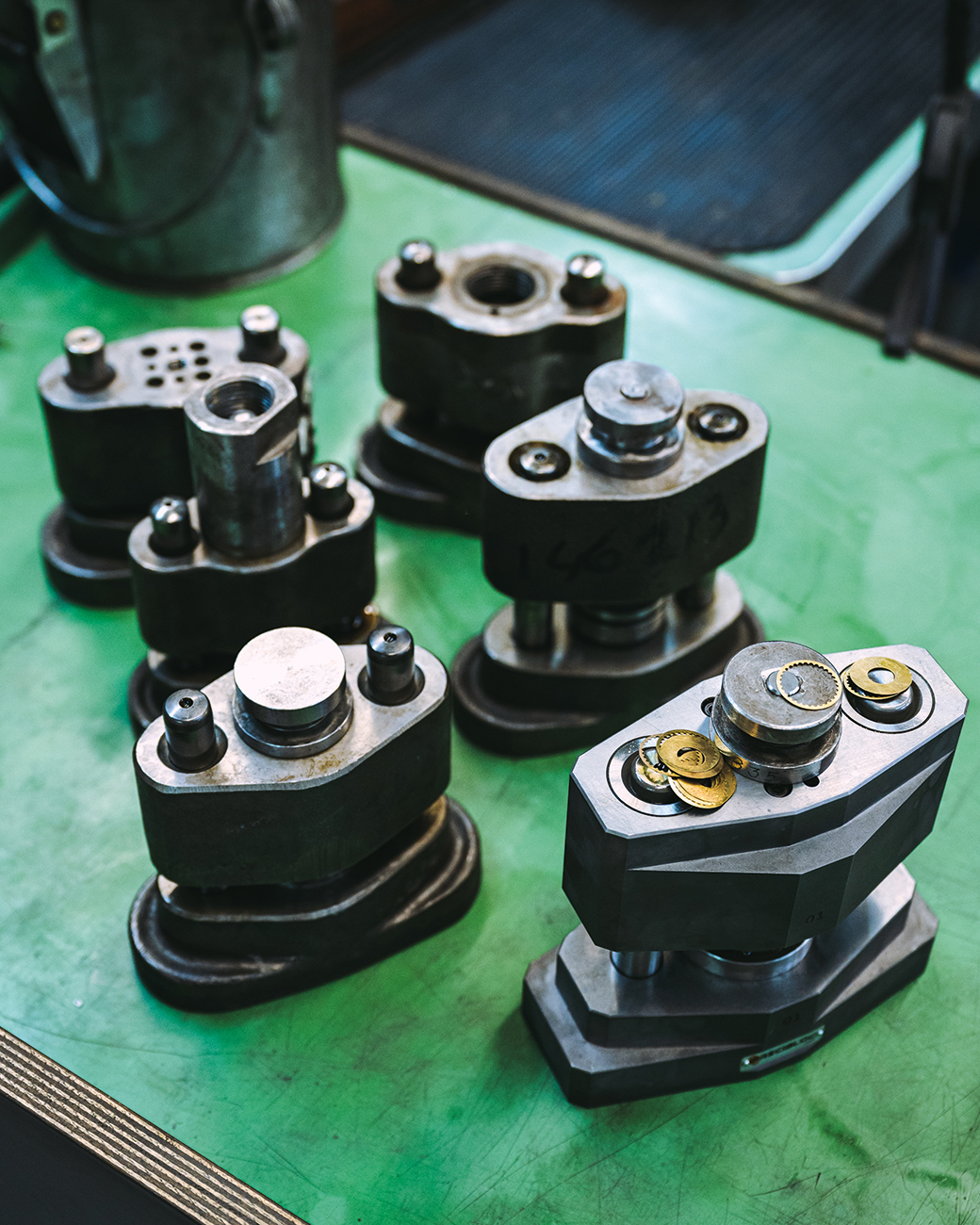
Raffy’s ambition materialized in 2006 with the acquisition of two key sites. The first was the historic Château de Môtiers, a 14th-century castle that now serves as the brand’s atelier for engraving, painting, and final assembly. The second was the Dimier 1738 Manufacture in Tramelan, a high-tech facility capable of producing all those components that Strandberg alluded to.
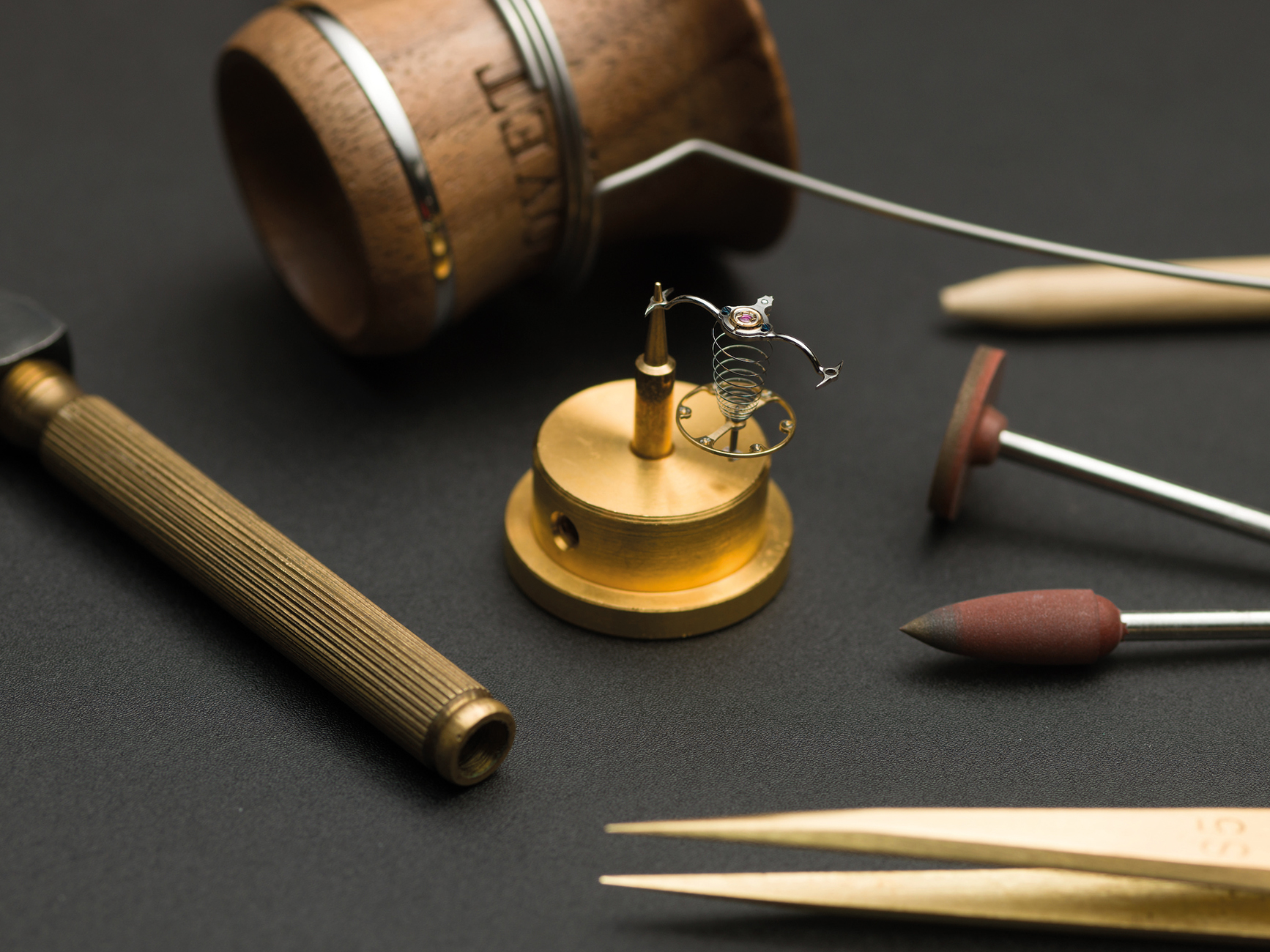
This dual setup gives Bovet a level of vertical integration rarely – perhaps never – seen in a brand of its size. Here, under one extended roof, everything is created: cases, dials, hands, and, crucially, the most sensitive elements of the movement. In an industry where most brands rely on external suppliers, Bovet’s Dimier manufacture produces its own regulating organs, including the hairspring—the delicate, coiled heart of a mechanical watch. This capability places Bovet in an elite circle of true manufactures, giving them complete control over the quality and precision of their timepieces.
While all this is well and good, you will wonder how it is even feasible for Bovet to do all this work in-house. Of course, it makes parts for other brands and uses its CNC machines to supply other trades as well. Whenever you discover a brand that has a wild excess of industrial capacity (as we also note in the examples of H. Moser & Cie and Parmigiani Fleurier elsewhere this issue), you should expect that it uses its capacity for other brands and other industries too. Should you doubt the information here about Bovet, please see WatchAdvisor’s excellent video on the manufacture.
A Canvas for Craft
Components are, as a matter of course, only the beginning. What truly elevates a Bovet watch is the devotion to a level of finishing and artistry that is almost unparalleled. Every surface, whether visible or hidden, is meticulously decorated by hand. Techniques like anglage (bevelling), Côtes de Genève, and perlage (circular graining) are executed to near-perfection.
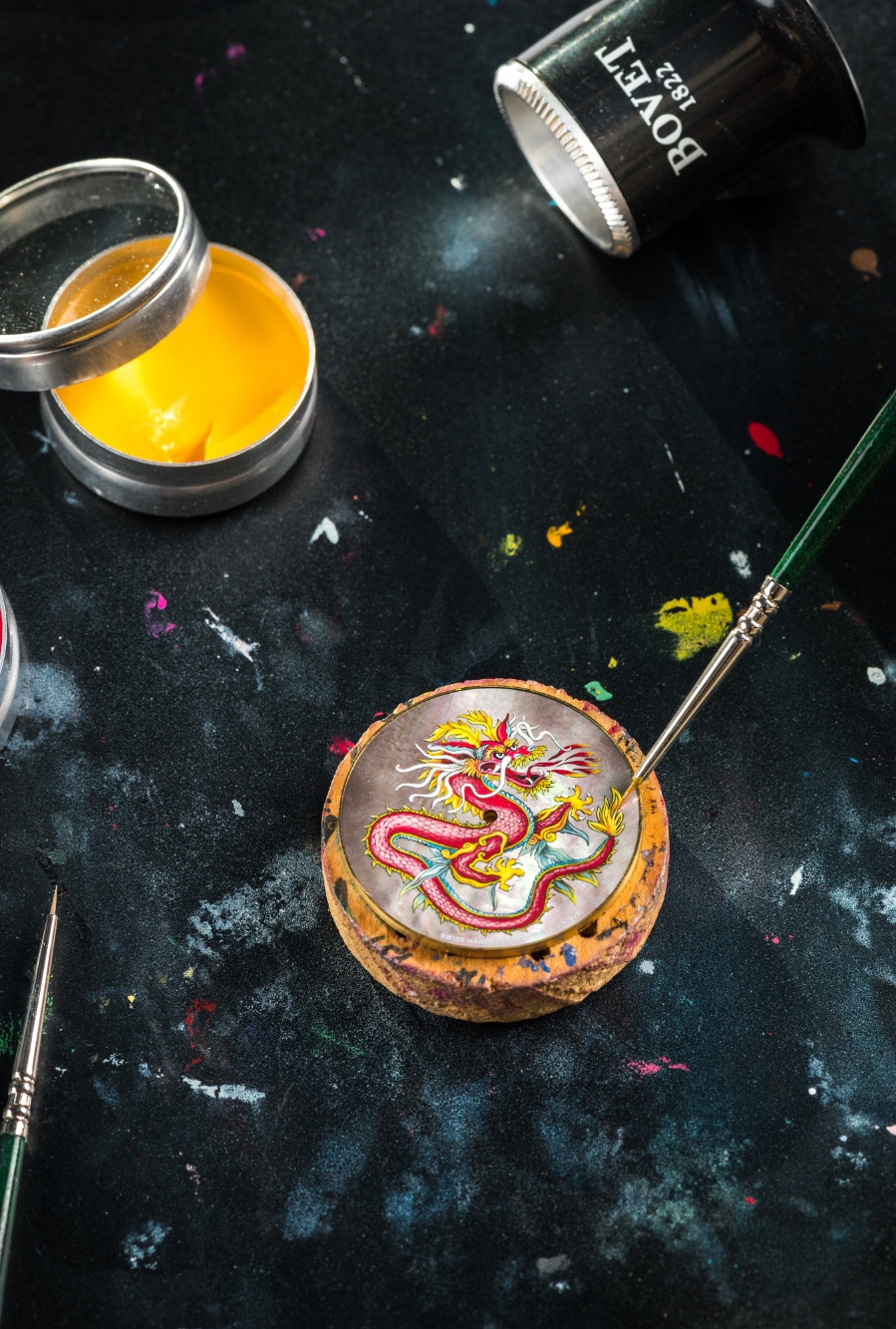
But it is the decorative arts that catapult Bovet watches into a class of their own. The Château de Môtiers and Tramelan facilities are home to master artisans who practice centuries-old crafts of hand-engraving and miniature painting. In the first instance, it is Bovet’s signature “Fleurisanne” engraving, with its intricate floral motifs, that adorns bridges, plates, and cases in a dazzling display of skill. As elsewhere, miniature painting sees the use of impossibly fine brushes, with artisans spending hundreds of hours creating detailed scenes. These can be on mother-of-pearl or enamel dials, often replicating famous works of art or crafting bespoke commissions for clients.
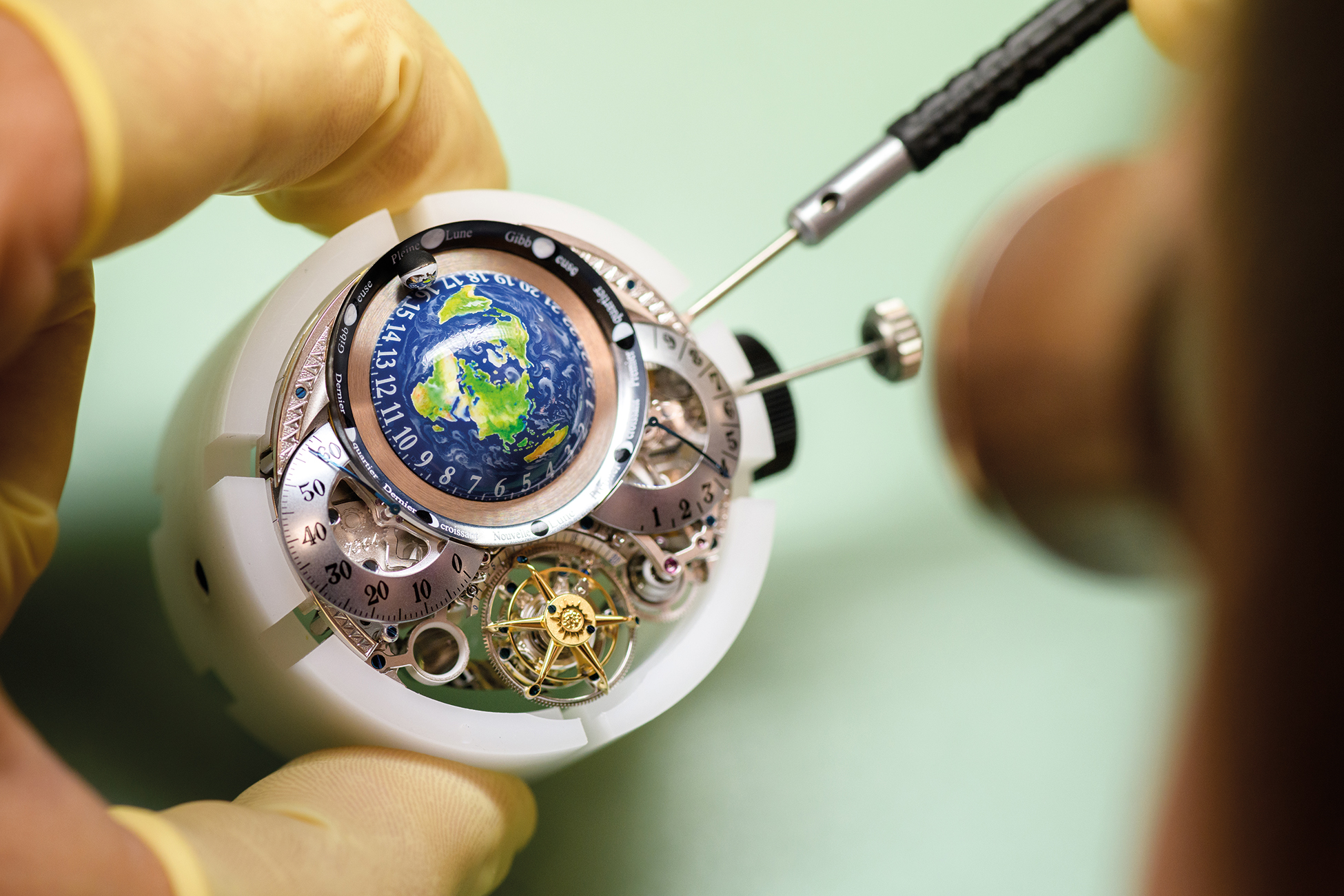
At the Château de Môtiers, the watchmakers do final assembly, including casing up the movements, and quality control. This castle, which is the one I eventually got into – thanks to Strandberg finally noticing me lurking about outside – is also where the servicing work happens and where collectors come to get the Bovet experience. This includes a little museum, with the historical pieces, which is also the part of the building that Raffy himself lives in.
In both decorative and finishing stages, Raffy and Strandberg both say that the work is done when it is done. What is important to Raffy is that the work is done in the most ideal way possible. He knows perfection is unattainable, but every element has to be the best that it can be; Raffy is exacting in his standards and, given the scale and reality of Bovet, he absolutely should be.
Clever Artistry
While steeped in tradition, Bovet is also a house of innovation. The most celebrated example is the patented Amadeo® convertible case system. With a simple, intuitive manipulation, a Bovet timepiece can be transformed from a reversible wristwatch into a pocket watch or a miniature table clock, all without the need for any tools. This ingenious system, which required seven years of development, reflects Raffy’s desire for his watches to be versatile and cherished in all aspects of a collector’s life. It is a modern technical marvel that serves the classical ideal of a timepiece as a personal, lasting treasure.
Under Raffy’s guidance, Bovet 1822 has become more than just a brand; it is a holistic vision of what haute horlogerie can be. By uniting the entire production chain and championing the artistic crafts that define Swiss watchmaking’s soul, Bovet ensures that the legacy of Edouard Bovet not only survives but thrives, creating timepieces that are as rich in history as they are in beauty.
This story was first seen as part of the WOW #81 Autumn 2025 Issue