
IWC’s Anti-Magnetic Charm
Who knew that ceramic could fit the IWC Ingenieur 42 so well?
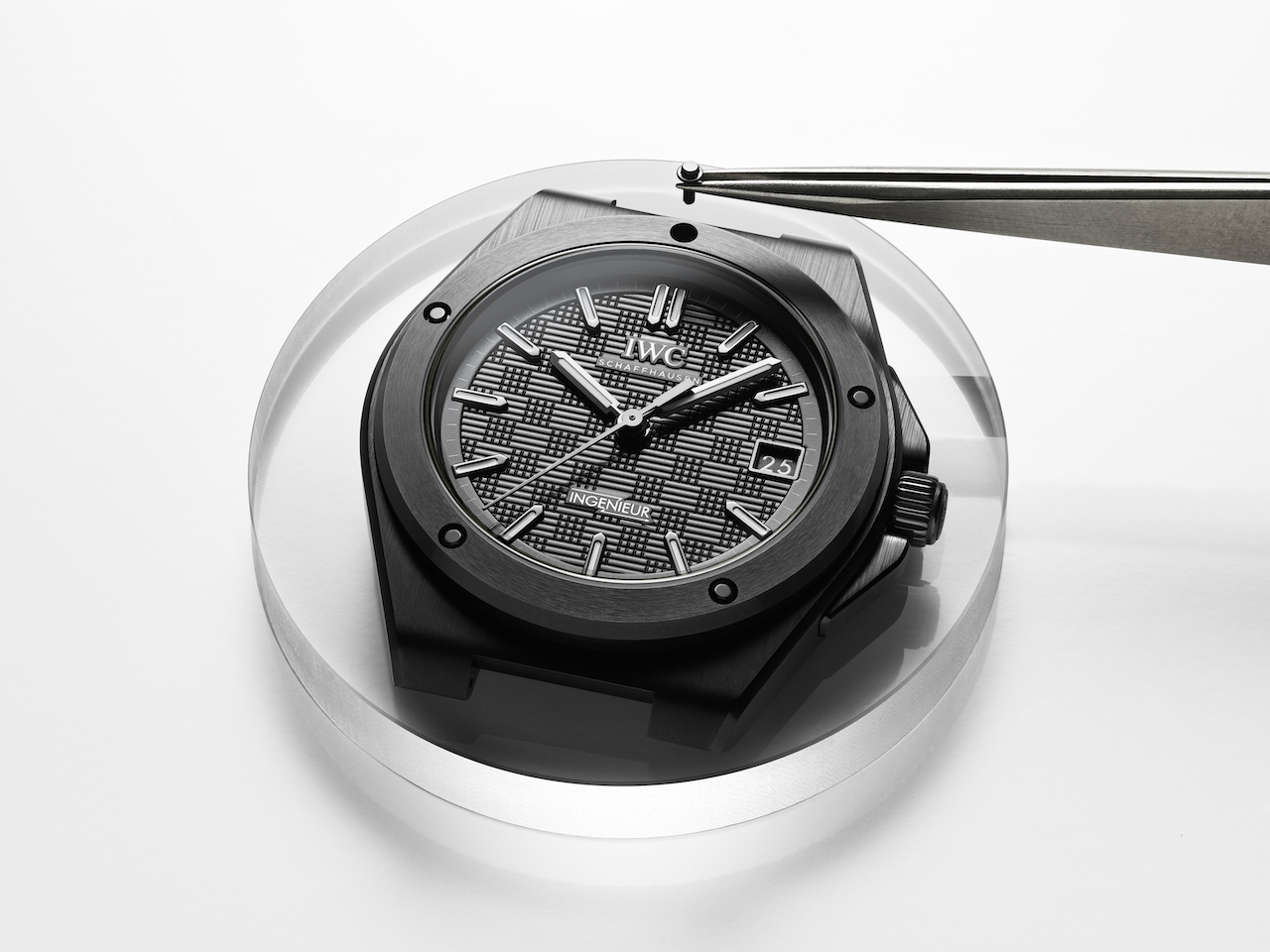
IWC has focused on the Ingenieur range for its 2025 novelties, which rounds up the strong Portugieser showing from the year before that, giving fans just that much more to be excited about. One particular model, the Ingenieur Automatic 42 Ceramic, has built on the collection’s ethos of a hardy watch, and the material used this time around increases the Ingenieur’s resistance to the demands of daily life.
Born in the 1950s, the Ingenieur was designed to be an anti-magnetic watch, which quickly drew the favour of those in the science and industrial communities. This was because the mini Faraday cage built within its case effectively shielded the movement from magnetic fields. And there numerous equipment that produced those fields in the post-war era.
This is why IWC’s first-ever fully-ceramic Ingenieur is so apt, because it now brings another level of robustness to this iconic collection. While we are not subjected to as many magnetic fields today, the professionals of our era cannot escape another common challenge that faces the wristwatch: desk scuffs and doorknob dings.
Enter IWC’s Ceramic Matrix Composite, which boasts 1300 Vickers on the hardness scale. As a comparison, typical stainless steel measurements hover around 200 Vickers, while titanium alloys can go up to 400 Vickers. This means that the outer layer of the watch is as robust as its internal components, lending some extra peace of mind to its wearer.
- Advertisement -
The watch is currently the largest Ingenieur offering at 42mm in diameter, but it wears much smaller than it sounds on paper. It could be the short lugs, the stealth black colourway, or its thickness of just 11.6mm that gives the illusion of a sub-42mm case. The lightness of ceramic probably helps too. Either way, this Ingenieur will fit a wide range of tastes, even those that veer towards smaller watches.
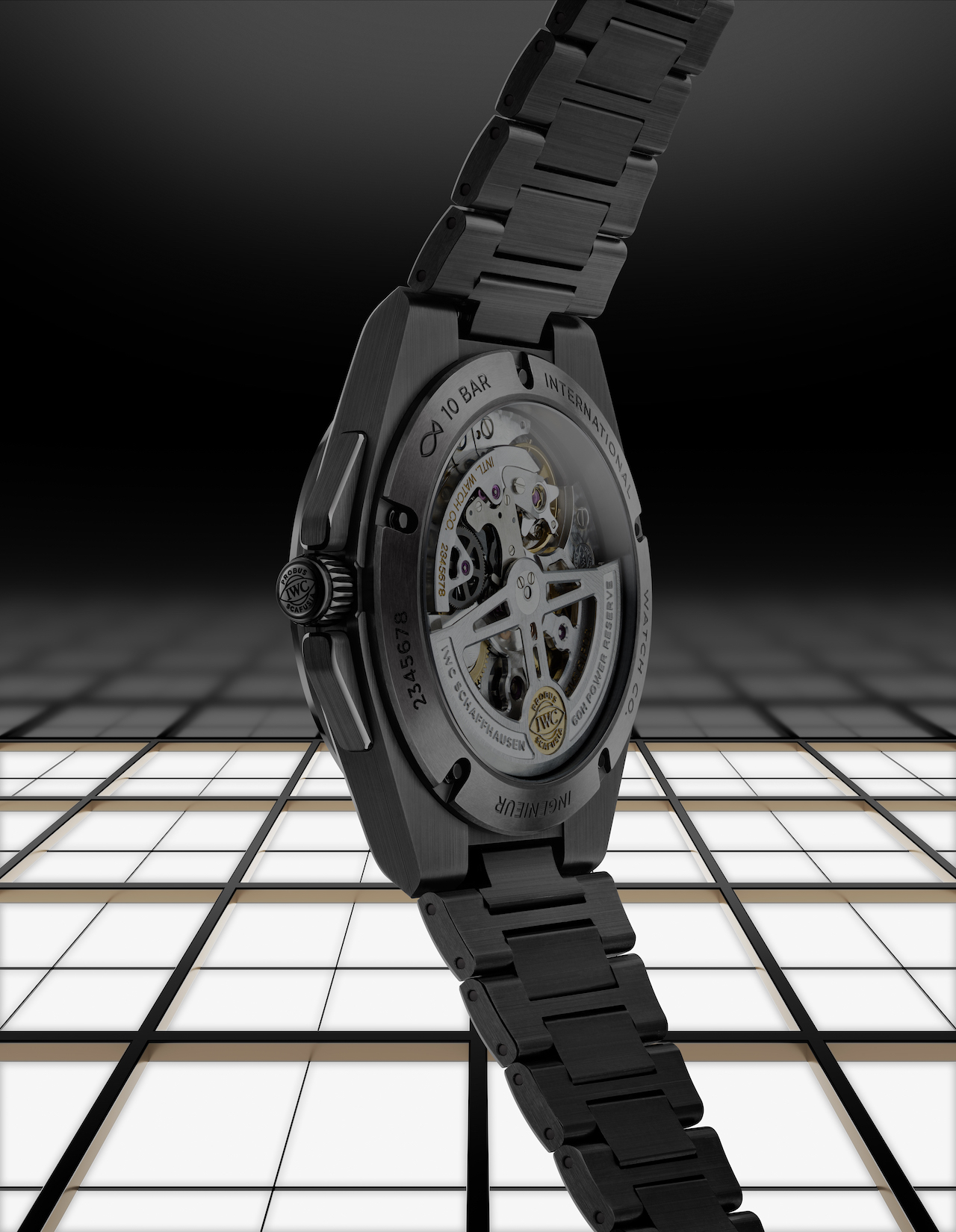
Inside the watch is IWC’s 82110 movement, which offers a substantial 60-hour power reserve, all while operating at 28,800 vibrations per hour. There is the added benefit of the Pellaton automatic winding system too, which ensures quicker replenishment of said power reserve with every wear. The movement contains ceramic components, too, as befits the nature of this watch.
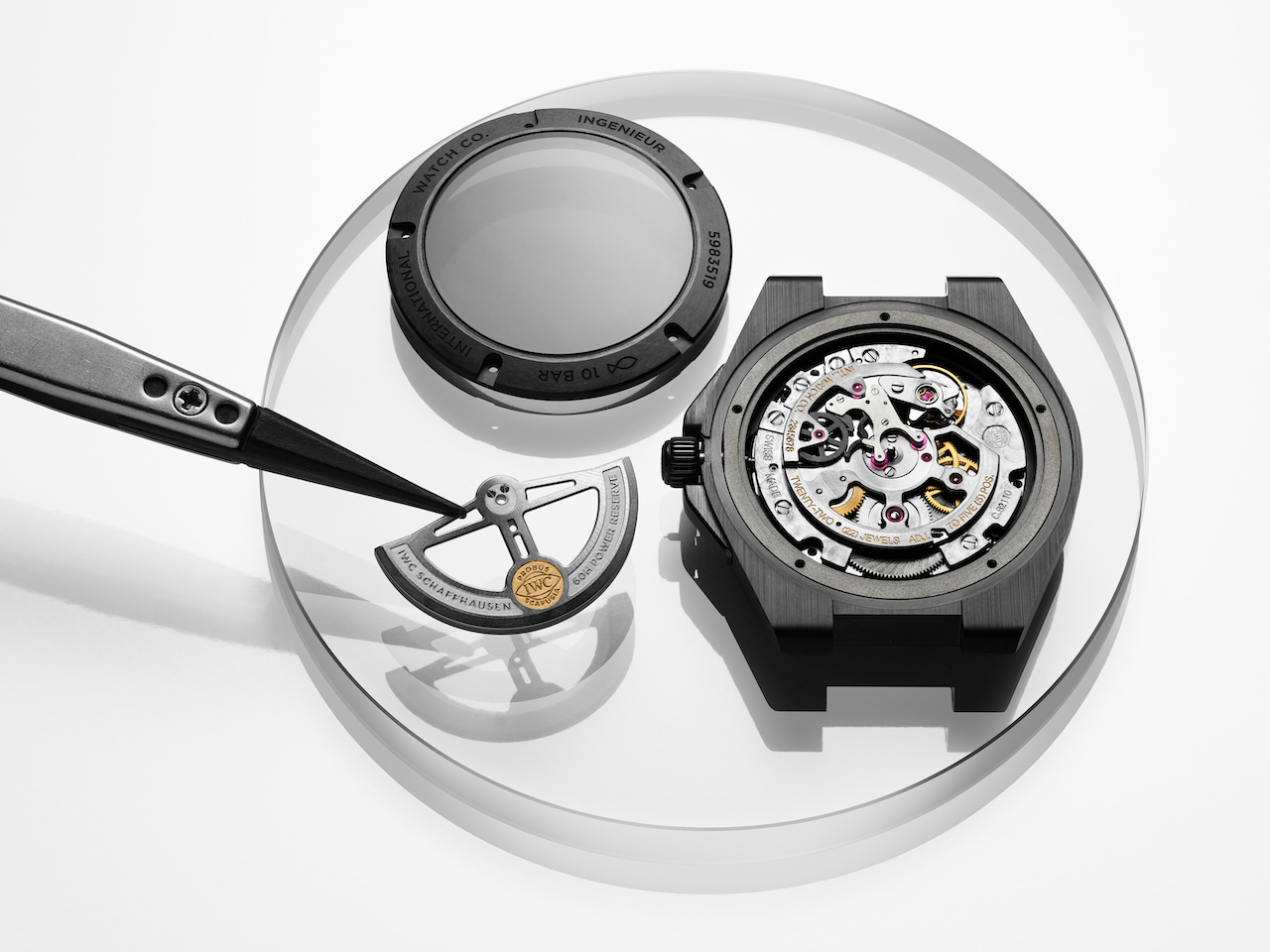
Place this Ingenieur beside its stainless steel counterpart and it will be a challenge trying to find a difference between the two. The significance of that seemingly ordinary statement becomes clear once the word ‘ceramic’ comes into the picture. Because of its hardness, it takes special materials such as diamonds or ceramics to process and finish the watch. So, while the components such as the case ring may look like a faithful representation of its other siblings, there are many more processes involved in getting this Ingenieur to look like its classic self.
All of the above merely highlights the engineering prowess of this watch. It has not yet taken into consideration the emotion that it can evoke from its would-be owners. But all it takes is one look at this watch to know that it will have no trouble in that department either.