

Hublot and the Art of Innovation
Hublot talks the talk when it comes to fundamental research in watchmaking. The manufacture responds to our queries on its processes.
From scratch-resistant sapphire cases to gold fused with high-tech ceramic, Hublot’s approach to innovation turns the mechanics of watchmaking into a playground for bold experimentation. LUXUO explores how the brand continues to shape the future of horology through fearless design and material mastery.
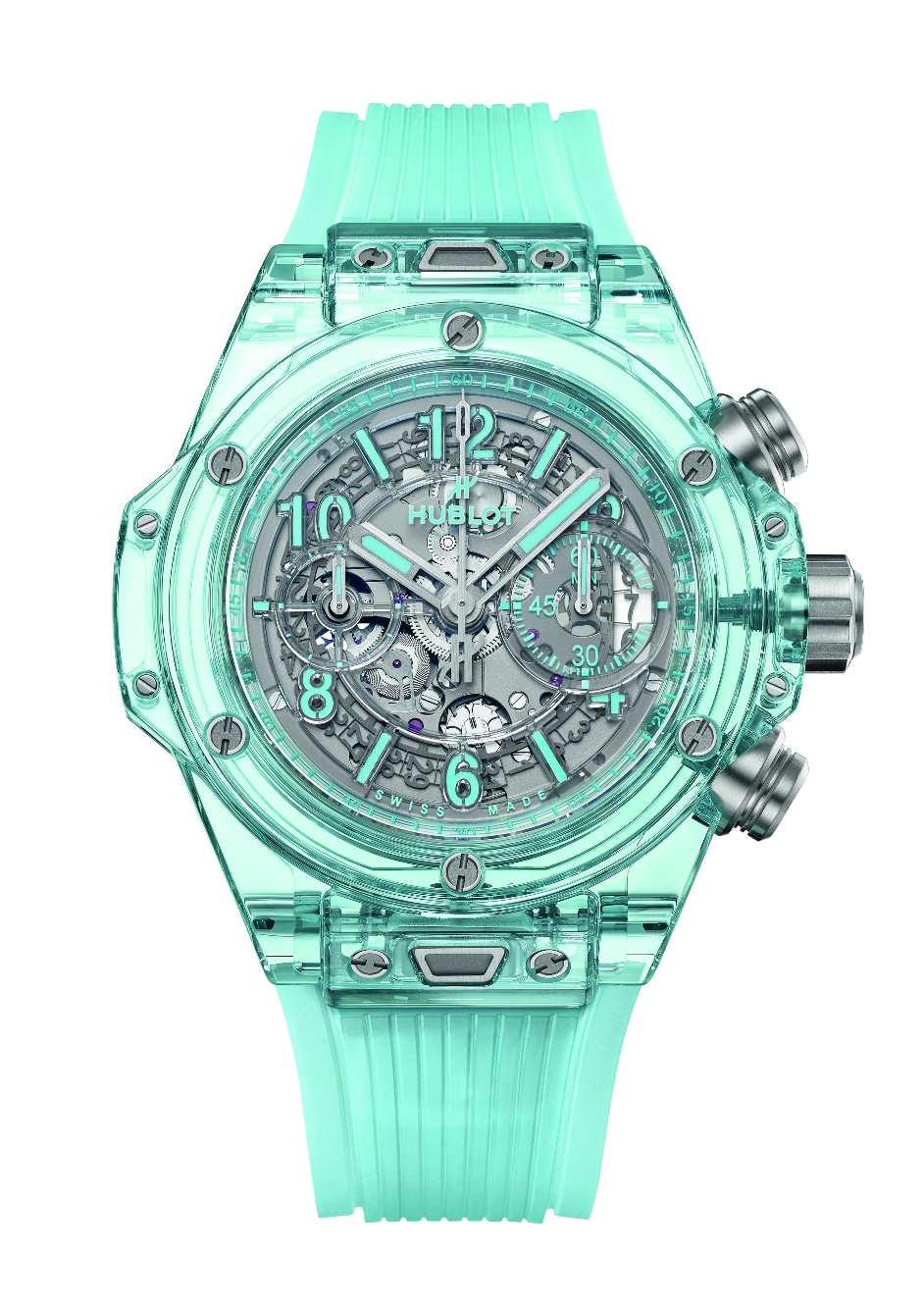
In terms of new material experiments, does Hublot operate with specific mandates, such as exploring premium materials that offer wearers a functional advantage? Please explain these mandates or the framework that guides fundamental research for Hublot.
At Hublot, material innovation is much more than just an aesthetic pursuit: it’s a philosophy. We operate with a clear framework, guided by our founding concept of “the Art of Fusion.” This means that we are constantly seeking to push the boundaries of traditional materials to offer concrete functional benefits to our customers. For example, Magic Gold, an exclusive alloy of 18-karat gold and ceramic, combines the nobility of gold with exceptional scratch resistance, a first in the watch industry.
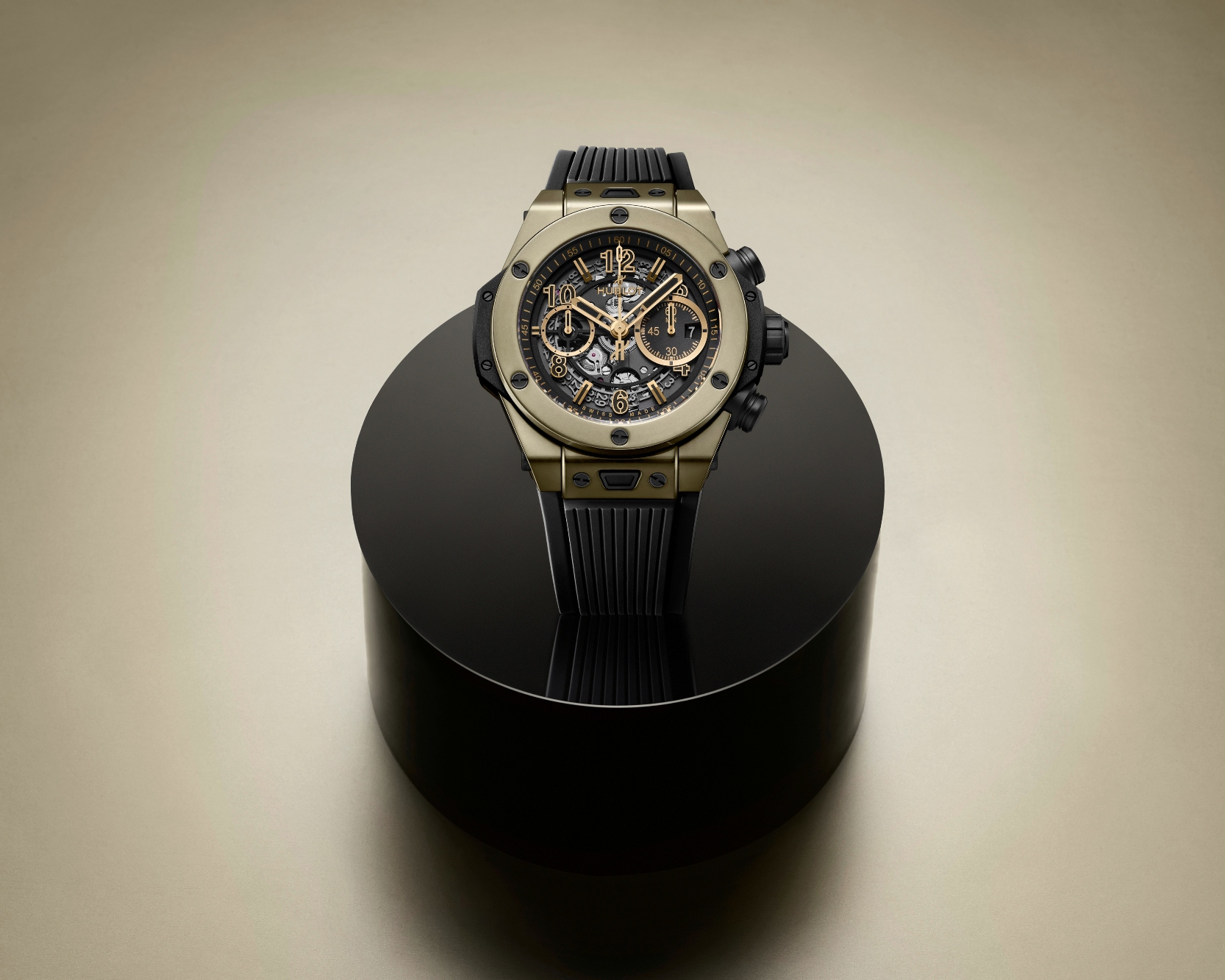
But it’s not just Magic Gold that is developed and produced in-house. We have also designed brightly coloured ceramics, such as bright red and bright yellow, ceramics that are absolutely unique in the world, as these shades are still not produced elsewhere. These innovations have enabled Hublot to offer watches specifically designed for the Ferrari car brand. In addition, thanks to our in-house facility, we manufacture sapphire loaves in our R&D department, further strengthening our mastery of materials.
Developing these materials in-house, allows us, when possible, to file patents, ensuring that we are truly in innovation. Another essential point lies in our team of experts. At Hublot, we value not only academic expertise, but also practical expertise. In the field of materials, there is a world between theory and practice. For example, to solve the challenges related to the production of brightly coloured ceramics, it was essential to rely on the experience acquired during the Magic Gold project.
- Advertisement -
Is innovation mainly important in case materials or does it extend to movements, dials, bracelets and the like? Does everything follow from the idea of fusion?
Innovation at Hublot knows no boundaries. While case materials are often at the heart of our
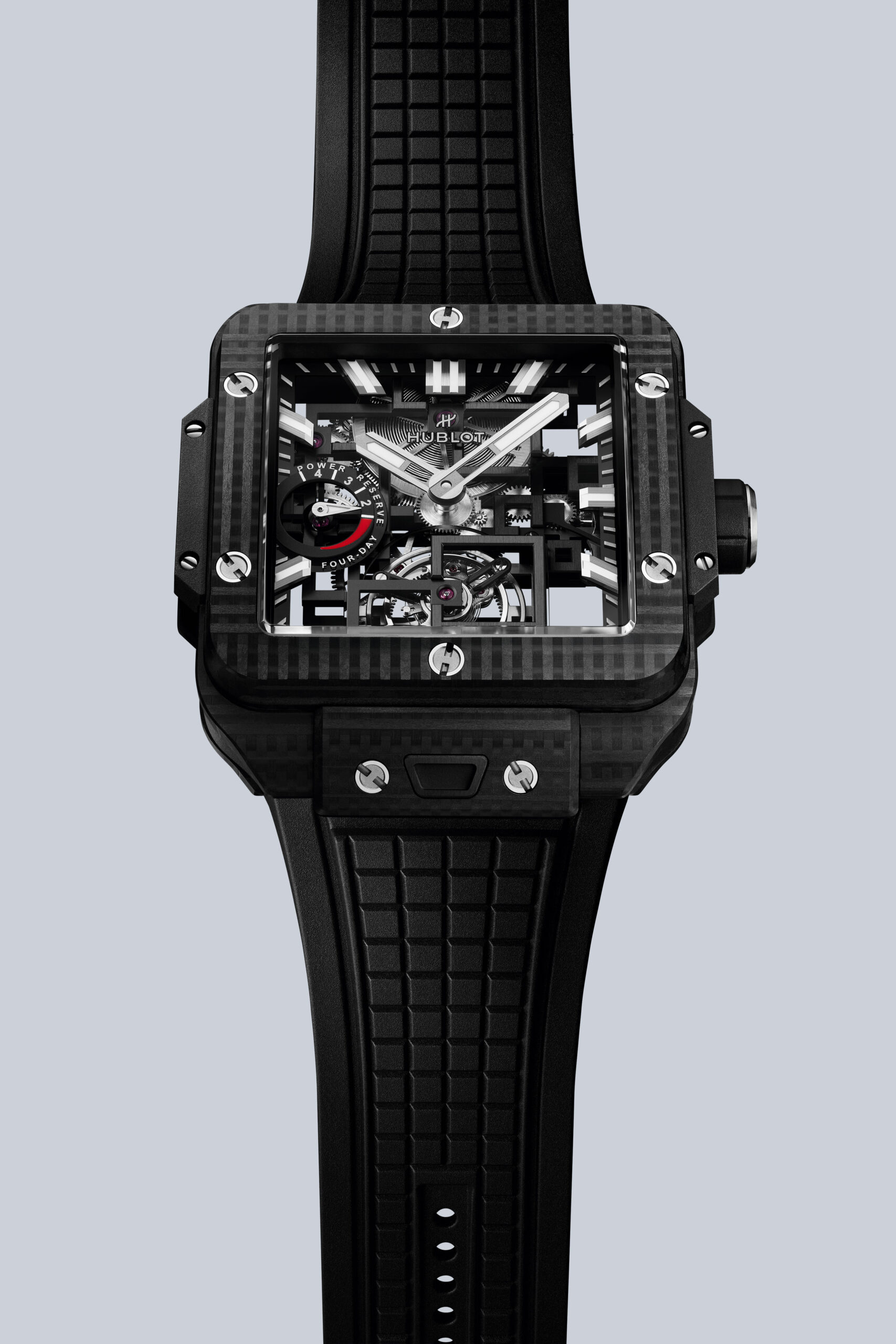
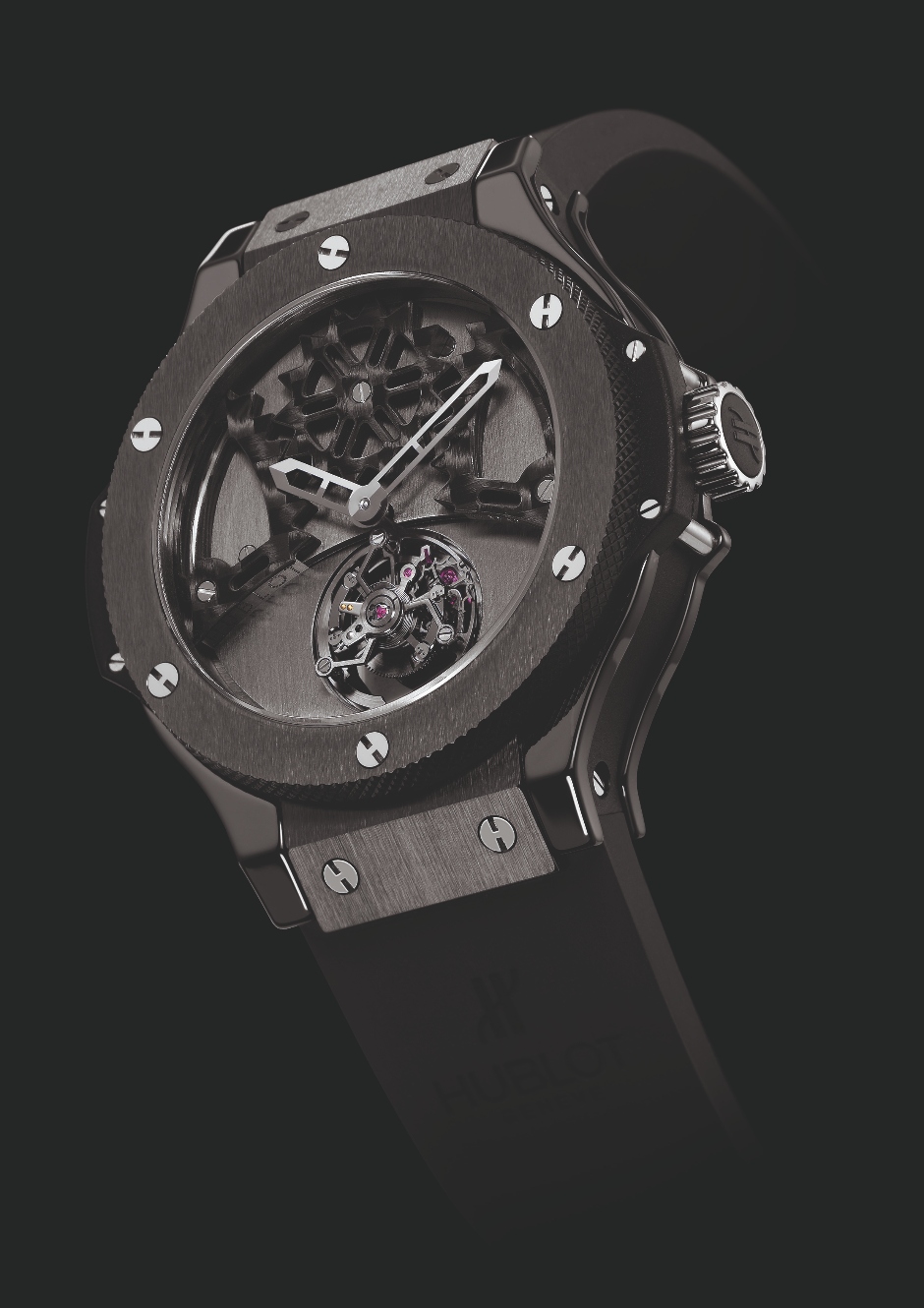
advances, our approach to fusion extends to all aspects of the watch: movements, dials, straps, and even manufacturing techniques. Each component is an opportunity to innovate. For example, carbon fibre, now emblematic in our creations, was already present inside our watches as early as 2007. The Bat Bang Tourbillon All Black model, produced in 50 pieces, marked a world-first by integrating this revolutionary material. This example illustrates our ability to anticipate trends and push the boundaries of traditional materials.
Let’s also take the example of movements: we have developed calibres like the HUB1240 with its unique clutch system or the HUB6023 which integrates a 3D carbon case. These innovations are not only technical, they reflect our desire to reinvent traditional watchmaking by incorporating modern materials and concepts. In short, everything at Hublot stems from the idea of fusion: fusion of materials, know-how and ideas. It is this holistic vision that allows us to create truly unique watches.
What’s foremost to Hublot when deciding on where and how to innovate in terms of the movement
When we innovate in movements, our priority is to meet two objectives: offer an exceptional user experience and push the boundaries of watchmaking mechanics. Each decision is guided by a key question: how can we surprise and delight our customers while respecting the standards of watchmaking excellence? With the experience acquired within the manufacture since 2007 (see above, on the Bat Bang), we are now able to integrate carbon fibre directly into the movements. Certain components, such as bridges or plates, are now made of carbon fibre, offering significant advantages in terms of lightness, strength and performance.
Take the HUB1240 and the HUB6023: these movements illustrate our ability to combine technical performance and material innovation. The HUB1240, with its unique clutch, improves the precision and fluidity of the chronograph, while the HUB6023 (see above), demonstrating our mastery of the fusion between mechanics and advanced materials. By innovating on movements, we seek to tell a story: that of watchmaking that does not simply follow the rules, but redefines them.
This story was first seen as part of the WOW Legacy 2025 Issue